Will Owning an Electric Utility Vehicle Increase My Energy Bills?

If you’re thinking about switching from a petrol or diesel utility vehicle to an electric model, it’s natural to wonder what impact it will have on your electricity bills. While an electric utility vehicle will increase the amount of electricity your site uses, that doesn’t necessarily mean your operating costs will increase overall.

In this guide, we’ll explain how much it costs to charge an electric utility vehicle, what affects those costs, how they compare with fuel-powered alternatives and how to estimate the running costs for your own business. We’ll also look at the wider picture, including battery size, charging infrastructure and the factors that have the biggest influence on day-to-day energy consumption.

Will an Electric Utility Vehicle Increase Your Energy Bills?

Charging an electric utility vehicle will increase your electricity bill because you’re using additional energy. However, electricity is only one part of the running cost.

For many businesses and estates, the increase in electricity costs is often offset by lower fuel costs, fewer moving engine components to maintain and the operational benefits/financial incentives that come with owning electric vehicles, such as queiter operation and zero tailpipe emissions.

So the real question is more around ‘will my overall operating costs go down when I switch to an electric utility vehicle?‘

In many applications, the answer is yes.


How Much Does It Cost to Charge an Electric Utlity Vehicle?

The cost will depend on the three main factors:

  • The size of the battery
  • How much of that battery you recharge
  • Your electricity tariff

The calculation itself is straightforward.

Battery energy (kWh) × Electricity price per kWh = Charging cost

For example, if a vehicle uses 10 kWh of electricity and your business pays 24p per kWh, a full recharge would cost around £2.40.

If the battery only needs half charging, the cost is roughly half that amount.

Although electricity prices vary between businesses, this simple calculation gives you a reliable way of estimating your own costs using the unit rate shown on your latest electricity bill.


Can You Charge an Electric Utility Vehicle from a Standard Plug Socket?

One of the biggest advantages of many electric utility vehicles is that they don’t necessarily require specialist charging infrastructure.

Many models can be charged using a standard 230V mains socket, making them easy to integrate into existing operations without major changes to your site. Simply park the vehicle at the end of the working day, connect the charger and leave it to recharge overnight.

Businesses operating larger fleets or using vehicles more intensively may choose to install dedicated charging points instead. These can reduce charging times, improve convenience and make it easier to manage multiple vehicles from a single location.

For many organisations, however, existing electrical infrastructure is often more than adequate for day-to-day charging.


How Long Does It Take to Charge an Electric Utility Vehicle?

Charging times vary depending on the vehicle, battery capacity, charger output and how much charge remains in the battery.

Rather than fully discharging the battery each day, most electric utility vehicles are simply topped up overnight after completing their daily workload. This means many vehicles begin every working day fully charged without affecting normal operations.


Your Electricity Bill Isn’t the Only Running Cost That Changes

One mistake businesses often make is looking only at the electricity cost without considering everything they’re replacing.

When moving away from petrol or diesel, you’re no longer paying for fuel every time the vehicle is used.

Depending on the application, you may also reduce ongoing maintenance associated with combustion engines, including oil changes, fuel filters, spark plugs, exhaust components and many of the routine servicing requirements that electric drivetrains simply don’t have.

That means a slightly higher electricity bill doesn’t necessarily translate into higher operating costs.

Instead, many businesses find they’re replacing one predictable expense with another that’s often easier to budget for.


Does a Bigger Battery Cost More to Run?

Larger batteries cost more to recharge from empty because they store more energy.

However, that doesn’t automatically mean they’re more expensive to own.

A business covering long distances every day may actually spend less over time with a larger battery because it avoids interruption, improves productivity and reduces the need for opportunity charging during working hours.

Choosing the right battery is about matching the vehicle to the job.

  • Too small and you’ll spend more time charging.
  • Too large and you may be paying for capacity you’ll rarely use.
  • The best solution is the one that comfortably completes your working day with enough reserve for unexpected journeys.


Why Do Two Businesses Pay Different Charging Costs?

Even if two companies own exactly the same electric utility vehicle, their energy bills may look very different. That’s because electricity consumption is heavily influenced by how the vehicle is used. Factors include:


Daily distance travelled

A maintenance team travelling a few miles around a holiday park will use considerably less energy than a grounds team covering a large university campus all day.


Payload

Carrying tools, equipment, materials or passengers requires more energy than operating an empty vehicle.


Towing

Many electric utility vehicles are designed to tow trailers, but heavier towing loads naturally increase energy consumption.


Terrain

Flat warehouse floors place far less demand on the drivetrain than muddy farms, construction sites or steep estates.


Driving style

Smooth acceleration and sensible driving generally improve efficiency compared with constant rapid acceleration and heavy braking.


Weather

Cold temperatures can temporarily reduce battery performance, while heating and air conditioning also consume energy.


All of these factors contribute to the amount of electricity you’ll ultimately pay to replace.


Can You Reduce the Cost of Charging an Electric Utility Vehicle?

Although electric utility vehicles are already economical to run, there are several ways to keep charging costs as low as possible.

  • Charge overnight where possible
  • Match the vehicle to the job
  • Kepe the vehicle well maintained
  • Consider renewable energy


How Much Could It Add to Your Monthly Electricity Bill?

Rather than thinking about individual charging sessions, it’s often more useful to estimate monthly usage.

For example, if a vehicle typically consumes around 10 kWh each working day and electricity costs 24p per kWh:

  • Daily charging cost: approximately £2.40
  • Monthly cost (22 working days): around £53

Double the energy usage and the cost roughly doubles.

For many organisations, that’s still considerably less than filling a petrol or diesel utility vehicle throughout the month.

The exact figures will always depend on your own electricity tariff and vehicle usage, but the calculation itself remains straightforward.


Running a Fleet? Here’s What to Consider

For businesses running a fleet, charging costs will depend on both the number of vehicles and how they’re charged.

Many organisations stagger charging overnight or between shifts to spread electricity demand and ensure every vehicle is ready for the next working day.

If you’re planning a larger fleet, it’s worth considering your site’s electrical capacity, charging infrastructure and future expansion plans before installing additional chargers.


Choosing the Right Electric Utility Vehicle Can Save More Than Electricity

Running costs aren’t determined by electricity prices alone. Instead, they’re influenced just as much by choosing the right vehicle for the job. Consider factors such as:

  • Daily mileage
  • Payload requirements
  • Towing capacity
  • Number of passengers
  • Terrain
  • Available charging facilities

Selecting a vehicle that’s properly matched to your operation helps maximise productivity while keeping long-term operating costs under control.


Conclusion

An electric utility vehicle will increase your electricity usage, but that does not automatically mean higher operating costs. Once reduced fuel spending, lower maintenance requirements and more predictable charging expenses are taken into account, many businesses find electric models are more economical to run over the long term.

The biggest factor is choosing a vehicle that suits your daily mileage, payload, towing requirements and working environment. Speak to the ePower Trucks team for practical advice on the most suitable model and charging setup for your operation.

The Best Off-Road Electric Utility Vehicles: A Buyer’s Guide

For businesses that regularly operate on challenging terrain, off-road electric utility vehicles have become an increasingly popular choice.

From farms and construction sites to National Trust properties, parks and estates, these vehicles need to perform reliably on muddy tracks, uneven ground and steep inclines where standard utility vehicles or conventional road vehicles may struggle.

Designed with features such as enhanced traction, robust suspension, durable construction and impressive towing capabilities, off-road electric utility vehicles are built to tackle demanding environments while maintaining productivity throughout the working day.

In this guide, we’ll explore some of the best off-road electric utility vehicles available from ePower Trucks, highlighting the features that make each model suitable for different industries, terrains and day-to-day applications.


What Should You Look For in An Off-Road Electric Utility Vehicle?

Choosing the best off-road electric utility vehicle starts with understanding your day-to-day requirements.  Different industries place different demands on utility vehicles, so considering how and where the vehicle will be used is just as important as comparing technical specifications. The terrain you work on, the loads you carry and the features you need will all play a role in determining which model is the best fit for your business.

Below, we explore some of the key characteristics to consider before making your decision.


Powerful Electric Torque

When working on steep slopes, uneven ground or muddy terrain, having enough power to keep moving is essential.

Electric utility vehicles deliver strong pulling power from low speeds, making it easier to climb hills, tow trailers and transport heavy loads across challenging terrain. This provides greater control when working in demanding environments and helps maintain productivity throughout the working day.

Robust Suspension

Travelling off-road means tackling uneven ground, potholes, rocks and ditches, all of which can affect the vehicle’s stability and comfort. A robust suspension system helps absorb these impacts, keeping the tyres in better contact with the ground for improved traction and control.

This not only gives the operator a smoother, more comfortable ride, but also helps reduce unnecessary strain on the vehicle when it’s used regularly on challenging terrain.

Durable Build Quality

Off-road environments can be tough on electric utility vehicles. Mud, water, dust, loose stones and uneven terrain all place extra strain on the vehicle and its components.

A durable chassis and high-quality construction help the vehicle withstand regular use in demanding conditions, while reducing the risk of unnecessary wear and tear.

For businesses that rely on their electric utility vehicle every day, this can help minimise downtime, reduce maintenance and keep operations running smoothly.

Traction & Ground Clearance

When working on uneven terrain, maintaining traction and having sufficient ground clearance are essential. Features such as four-wheel drive, suitable tyres and higher ground clearance can help improve grip, allowing the vehicle to tackle muddy tracks, loose gravel and obstacles more confidently.

Choosing the right vehicle for your working environment will help improve stability and keep you moving across challenging terrain.

Payload & Towing Capacity

From transporting tools, equipment and heavy materials to towing trailers across large sites, having an electric utility vehicle with a high payload and towing capacity is essential.

Choosing a model that can comfortably handle your day-to-day workload helps improve efficiency while reducing the need for multiple trips.

This not only saves time but also gives your business the flexibility to carry out a wider range of tasks with confidence.


Why Choose an Off-Road Electric Utility Vehicle?

Off-road electric utility vehicles offer a range of practical benefits for businesses working in demanding environments. They’re quieter to operate than petrol or diesel alternatives, produce no exhaust emissions during use and can help reduce routine maintenance requirements thanks to having fewer moving parts.

Whether you’re working on a farm, construction site or large estate, an electric off-road utility vehicle can provide a reliable, efficient solution for transporting people, equipment and materials across challenging terrain.


Our Top Off-Road Electric Utility Vehicle Picks

Now that you know what to look for in an off-road electric utility vehicle, it’s time to compare some of the best models available from ePower Trucks.

Whether you’re working on a farm, construction site or large estate, each of the vehicles below offers different strengths to suit a range of applications and working environments.


1. Pangea 4×4 Electric Utility Vehicle

If your priority is maximum off-road capability and navigating challenging terrain, the Pangea 4×4 EUV is one of our top recommendations.

Designed to tackle even the most demanding outdoor environments, the Pangea 4×4 EUV is an excellent choice for businesses that regularly work on challenging terrain.

Combining powerful electric performance with four-wheel drive, it’s built to navigate muddy fields, uneven tracks and steep inclines while transporting people, tools and equipment with ease.

Key features:

  • Four-wheel drive for enhanced traction on challenging terrain
  • Powerful 15kW electric motor
  • Available in two or four-seat configurations
  • Up to a 40-mile driving range
  • 200kg carrying capacity and 500kg towing capacity
  • Built to perform across muddy, uneven and challenging terrain

Best suited for:

  • Farms
  • Estates
  • Forestry
  • Parks & gardens
  • Grounds maintenance

Why we recommend it:

The Pangea 4×4 stands out for its excellent off-road capability, making it ideal for businesses that need reliable performance across challenging terrain.

Its combination of four-wheel drive, powerful electric performance and impressive carrying and towing capabilities makes it a versatile choice for a wide range of outdoor applications.


2. Alke ATX 340 E

Designed for demanding commercial environments, the Alke ATX 340 E is built to handle heavy-duty workloads both on and off-road.

Combining a powerful electric motor, MacPherson front suspension and a durable chassis, it delivers the strength and stability needed to perform reliably across challenging terrain.

Key Features:

  • Up to 100 miles of operating range for all-day performance
  • 1,630kg chassis capacity and 4,500kg towing capacity for transporting heavy equipment and materials.
  • Capable of tackling slopes of up to 35%, making it well suited to challenging terrain
  • MacPherson front suspension for improved stability and comfort on rough ground
  • Durable chassis built to withstand demanding commercial environments

Best suited for:

Why we recommend it:

The Alke ATX 340 E is a great choice for businesses that need more than just off-road capability.

Its high chassis and towing capacities make it particularly well suited to transporting heavy equipment, machinery and materials across large sites, while its long operating range and ability to tackle slopes of up to 35% ensure it can keep working in demanding environments throughout the day.


Choosing the Right Off-Road Electric Utility Vehicle

There isn’t one best off-road electric utility vehicle for everyone. The right choice will depend on the terrain you’re working on, the tasks you’ll be carrying out and your day-to-day operational requirements.

If your priority is tackling challenging terrain, steep slopes and muddy tracks, the Pangea 4×4 EUV is an excellent choice. However, if you regularly transport heavy equipment, tow trailers or need greater payload capacity, the Alke ATX 340 E may be better suited to your business.

Investing in the right off-road electric utility vehicle can improve productivity, reduce running costs and help your business operate more efficiently in demanding environments.

If you’re still unsure which off-road electric utility vehicle is right for your application, the team at ePower Trucks is on hand to offer expert advice and help you find the best solution for your requirements. Get in touch with our team today for expert advice, or explore our range of electric utility vehicles to find the right model for your business.


What Explosion-Proof and ATEX Mean for Electric Utility Vehicles

Electric utility vehicles are being used more and more in hazardous industrial environments such as chemical plants, pharmaceutical facilities and oil and gas sites. In these settings, even a small spark or excessive heat can create a serious safety risk. That’s why some vehicles require explosion-proof or ATEX-rated protection. For businesses operating in hazardous areas, understanding what ATEX means helps ensure vehicles are both compliant and suitable for the working environment.

In this aticle, we explain what explosion-proof means in practice for EUVs and what businesses should consider when specifying compliant industrial vehicles.

What Does ATEX Mean?

ATEX refers to regulations covering equipment used in potentially explosive atmospheres. The term comes from the French phrase ATmosphères EXplosibles and applies to environments where flammable gases, vapours, sparks or combustible dust may be present.

ATEX requirements are common in industries including:

  • Chemical processing
  • Pharmaceuticals
  • Oil and gas
  • Food production
  • Paint manufacturing
  • Waste and recycling

In these environments, standard industrial vehicles may create ignition risks through electrical systems, heat or static discharge.


What Makes an EUV Explosion-Proof?

Explosion-proof electric utility vehicles are modified to reduce the risk of igniting hazardous substances nearby.

This usually involves protecting components that could generate sparks, as well as excessive heat or static electricity during normal operation.

Depending on the application, modifications may include:

  • Protected electrical systems
  • Anti-static materials
  • Sealed connectors and wiring
  • Temperature-controlled components
  • Spark-resistant braking systems
  • Flameproof enclosures

These changes allow vehicles to operate more safely within classified hazardous areas.


Understanding ATEX Zones

Hazardous environments are divided into zones based on how likely explosive substances are to be present.

The higher the risk, the stricter the equipment requirements.

Zone Environment
Zone 0 Explosive gas present continuously
Zone 1 Explosive gas likely during normal operation
Zone 2 Explosive gas unlikely or temporary
Zone 20 Combustible dust present continuously
Zone 21 Combustible dust likely during operation
Zone 22 Combustible dust occasional or temporary

Most ATEX electric utility vehicles are designed for Zone 1, Zone 2, Zone 21 or Zone 22 environments.

The correct specification depends on the site’s hazardous area classification and risk assessment.


Why Standard Electric Vehicles Are Not Always Suitable

Electric utility vehicles already eliminate some risks associated with diesel or petrol engines, but they still contain components that may create ignition hazards. Potential risks include:

  • Electrical arcing
  • Static discharge
  • Battery heat
  • Overheated components

Without ATEX protection, standard vehicles may not meet site safety requirements in hazardous areas.

This is particularly important in environments where flammable vapours or fine dust particles are regularly present during daily operations.


Where ATEX Electric Utility Vehicles Are Commonly Used

ATEX-rated vehicles are typically used where internal transport or materials handling is needed within hazardous environments. Common applications include:

  • Chemical manufacturing facilities
  • Pharmaceutical production sites
  • Oil refineries
  • Grain and food processing plants
  • Paint and solvent storage areas
  • Recycling and waste facilities

These vehicles are often used for transporting equipment, towing loads, carrying passengers or supporting maintenance operations safely within controlled zones.

Businesses operating in hazardous environments may also require specialist ATEX electric utility vehicles or explosion-proof electric tow tractors depending on site requirements.


Maintenance and Compliance Still Matter

ATEX compliance does not end once the vehicle is delivered. Regular inspections and correct servicing are essential to maintain safety standards. Damaged wiring, worn seals or incorrect replacement parts can compromise explosion protection systems. Maintenance checks typically include:

  • Electrical enclosure inspections
  • Battery and connector checks
  • Anti-static system testing
  • Brake and temperature monitoring
  • Cable condition inspections

Servicing should always be carried out using approved parts and technicians familiar with hazardous area equipment.


Choosing the Right ATEX Vehicle

The right explosion-proof vehicle depends on the environment and operational demands. When selecting an ATEX electric utility vehicle, businesses should consider:

  • Hazardous area classification
  • Payload or towing requirements
  • Indoor or outdoor operation
  • Battery runtime requirements
  • Charging arrangements
  • Shift patterns and duty cycles

Choosing a vehicle that matches the actual application helps improve both safety and operational efficiency.


Understanding ATEX Requirements for EUVs

Explosion-proof EUVs are designed to operate safely in environments where ignition risks must be carefully controlled. Understabding how the ATEX classifications work and how vehicles are modified to meet them will ensure your business operates safer in when transporting and towing loads in hazardous industrial environments.

If you’re business sees frequent exposure to these sort of environments and is need need of suitable and compliant EUVs, explore our range of explosion proof electric vehicles or get in touch to speak to a member of our sales team for more information.

How to Keep Running Costs Low for Electric Utility Vehicles

Reducing the running costs of electric utility vehicles requires more than simply switching from diesel to battery power. Charging strategy, battery care, preventative maintenance and operator behaviour all play a direct role in keeping your EUVs efficient with controlled long-term costs.

In this article, we will explore practical ways to keep electric utility vehicles and fleets cost-effective for UK owners.

How to Keep Running Costs Low for Electric Utility Vehicles

Electric utility vehicles are widely used across warehouses, factories, airports and logistics facilities because they offer lower operating costs than diesel or petrol alternatives. However, running an efficient fleet still requires careful management.

Battery performance, charging routines, maintenance schedules and vehicle usage all influence day-to-day operating costs. Small inefficiencies can quickly become expensive when vehicles are used continuously across busy sites.

The most cost-effective fleets usually focus on the basics: reducing unnecessary energy use, preventing avoidable repairs and keeping vehicles available for longer.


1. Use Smart Charging Practices

Charging habits have a direct impact on both electricity costs and battery lifespan.

Poor charging routines can reduce battery efficiency over time, while unnecessary charging during peak-rate periods may increase operational costs. For fleets operating multiple vehicles, even small improvements in charging strategy can make a noticeable difference.

A few simple practices can help:

  • Charge vehicles during off-peak electricity periods where possible
  • Avoid repeatedly draining batteries to very low levels
  • Use chargers matched to the battery specification
  • Keep charging areas clean, dry and well ventilated
  • Remove damaged charging cables or connectors immediately

Lithium-ion batteries, now common in many electric utility vehicles, generally perform best when kept within a moderate charge range rather than constantly being fully discharged.

Smart charging systems can also help larger fleets manage power demand more efficiently by staggering charging times across multiple vehicles. This reduces pressure on site infrastructure and helps avoid unnecessary energy costs.


2. Reduce Battery Drain During Daily Use

How your EUVs are driven has a significant effect on energy consumption.

Frequent harsh acceleration and overloaded vehicles are two of biggest offenders for placing additional strain on your batteries and drivetrains. Across a full EUV fleet, inefficient operation can noticeaably reduce available runtime and increase charging frequency.

Simple operational changes often improve efficiency quickly:

Operational Change Benefit
Smoother acceleration and braking Reduces battery strain and energy consumption
Planned travel routes Minimises unnecessary movement traversing incorrect or inefficient routes
Correct load handling Prevents excess motor strain
Speed limit settings Improves energy efficiency and safety
Reducing idle time Preserves battery charge

Route planning is especially important in larger facilities where repeated stop-start journeys can waste energy throughout the day.

Some businesses will also employ third-party systems to monitor vehicle usage like telematics. These systems track factors such as:

  • Battery performance
  • Operating hours
  • Energy consumption
  • Route planning

This helps fleet managers identify inefficient driving patterns or underperforming vehicles before they become larger issues.

3. Prevent Small Faults Becoming Expensive Repairs

Electric utility vehicles typically require less maintenance than combustion-powered vehicles but regular inspections still matter.

Minor faults that go unnoticed such as loose battery connections or underinflated tyres can gradually increase energy use and lead to unplanned downtime. Preventative maintenance helps identify these potential problems arely while keeping repair costs more predictable. So routine checks should include:

  • Tyre condition and inflation pressure
  • Brake performance
  • Steering response
  • Battery connections
  • Charging equipment condition
  • Warning lights or fault codes

Tyres are often overlooked, yet underinflated tyres increase rolling resistance and force vehicles to use more energy during operation.

Electrical connections should also be inspected regularly. Loose or damaged connectors can affect charging efficiency and may eventually lead to vehicle faults or battery issues.

A consistent preventative maintenance programme usually costs far less than emergency repairs or operational disruption caused by vehicle breakdowns.


4. Reduce Unplanned Downtime With Fleet Monitoring

Downtime is often one of the biggest hidden costs within industrial vehicle fleets.

When vehicles unexpectedly fail, the impact goes beyond repair costs. Delays to warehouse operations are always the most costly impact, but issues will also arise with delays to prodution schedules and internal transport systems which will quickly impact wider productivity.

Fleet monitoring systems help reduce these risks by identifying issues early. Modern EUVs will often provide data on the following, and more:

  • Battery condition
  • Charging performance
  • Operating hours
  • Error codes
  • Energy consumption
  • Service intervals

This allows maintenance teams to spot declining performance before a vehicle becomes unusable.

For example, a vehicle showing reduced battery range or repeated charging issues may require servicing long before a complete failure occurs. Addressing these issues early helps avoid disruption and keeps fleets operating more consistently.


5. Choose the Right Vehicle for the Job

Using oversized or unsuitable vehicles can quietly increase operating costs, which is why its important to confirm your operational needs with an expert before making a purchase on any EUV.

Vehicles with larger battery systems or higher payload capacities generally consume more energy and may require more maintenance over time. Selecting vehicles based on actual operational requirements usually improves efficiency and reduces unnecessary running costs.

When reviewing fleet suitability, consider:


Payload Requirements

Vehicles regularly carrying excessive loads place more strain on motors, brakes and batteries.


Indoor or Outdoor Use

Warehouse vehicles may require compact dimensions and non-marking tyres, while outdoor vehicles often need weather protection and different traction setups.


Daily Duty Cycles

A vehicle used continuously across multiple shifts has very different charging and battery requirements compared with one used occasionally for site maintenance or facilities work.

Purpose-built electric utility vehicles and electric tow tractors designed for specific industrial environments often deliver better efficiency than adapting unsuitable general-purpose vehicles.

6. Train Operators to Improve Efficiency
Operator behaviour plays a major role in vehicle performance and running costs.

Even well-maintained vehicles can become inefficient if operators use poor driving or charging practices. Consistent training helps reduce avoidable wear while improving battery efficiency and vehicle reliability. Training should cover:

  • Efficient driving techniques
  • Safe load handling
  • Correct charging procedures
  • Daily inspection routines
  • Reporting faults promptly

Encouraging operators to report small faults early is particularly important. Minor issues such as brake drag, tyre damage or charging problems often become more expensive if ignored.

For larger operations, refresher training and vehicle usage monitoring can also help maintain consistent standards across the fleet.


7. Focus on Lifetime Running Costs Rather Than Purchase Price

The lowest purchase price does not always result in the lowest long-term operating cost.

When assessing electric utility vehicles, it is important to consider total cost of ownership rather than upfront cost alone. This includes:

  • Energy consumption
  • Battery lifespan
  • Maintenance requirements
  • Vehicle downtime
  • Parts availability
  • Expected service life

For example, lithium-ion battery systems often cost more initially but may reduce maintenance needs, charging time and replacement frequency over the long term.

A more reliable vehicle with lower downtime can also improve operational efficiency significantly in busy warehouse or logistics environments.


Conclusion

Reducing running costs comes down to consistent day-to-day management. Efficient charging, preventative maintenance, operator training and choosing the right vehicle can all help lower energy use, reduce downtime and extend vehicle lifespan.

For businesses using electric utility vehicles daily, improving efficiency also supports more reliable operations over time. Browse our range of electric utility vehicles or get in touch with the team for further advice.

7 Ways to Configure the EP AMP XL for Different Applications

The EP AMP XL is one of our most adaptable and high-performance vehicles within our road legal EUV range. Its value lies not just in its base platform, which enables 400kg of carrying capabilities and 150kg of off road towing, but in how easily it can be configured to suit different operational demands. The right chassis or body modification can make all the difference in improving the usability and efficiency of your vehicle on your site.

Below are eight commonly specified customisations for the EP AMP XL, each suited to a distinct type of task or working environment, which might benefit you.

1. Caged Chassis Body for Secure Load Carrying

Black & White Ep AMP XL

A caged chassis body adds a fixed steel or mesh enclosure around the AMP XL’s load bed, designed to contain materials that are difficult to strap or stabilise.

This is typically required when:

  • Loads are loose or irregular in shape (e.g. scrap, packaging, waste etc.)
  • Vehicles operate on uneven ground or stop-start routes
  • There is a need to reduce reliance on manual load securing (through crude cable ties or rope)

For drivers, this means consistency and peace of mind knowing that your carried loads aren’t in danger of spilling out, leading to loss of equipment/materials. So in environments where compliance with UK load restraint guidance is a concern, a caged body provides a reliable baseline without adding procedural complexity.


2. Dropside Body for Multi-Directional Access


Ex Demo AMP Back

A dropside body features hinged side panels that fold down, allowing the load bed to be access from either side as well as the rear. This works well for:

  • When multiple people are loading/unloading at the same time
  • Where loads need to be accessed from different sides
  • In environments where vehicles cannot always be positioned perfectly

Typical loads include tools and materials which are distributed across the bed, as well as bagged or boxed items that need partial unloading.

The dropside design makes it easier to work around the vehicle rather than from a single point. Teams can load and unload simultaneously, which helps keep jobs moving, particularly on larger sites.

It also allows drivers to access specific items without fully unloading the vehicle, which is useful when carrying mixed loads for different tasks.


3. Tipper Bed for Bulk Material Movement

A tipper bed uses a powered lifting mechanism to raise the load bed and release its contents in one controlled movement. This works well for:

  • When the same material is moved repeatedly throughout the day
  • Where non-solid materials are being moved like liquids or large quantities of small aggregates and materials (e.g. soil, gravel, concrete, organic material, site waste etc.)
  • Where unloading needs to be quick and consistent
  • In workflows with short, frequent trips between locations

Drivers can unload an entire load in seconds without manual effort, which makes a clear difference in high-frequency tasks. This keeps turnaround times consistent and allows more loads to be moved within a shift. It also simplified the unloading process, reducing variation between operators.


4. Flatbed Conversion for Long Loads


A flatbed, similar to a dropside, creates an open platform for carrying items that extend beyond typical load dimensions. They are often used:

  • When carrying long or oversized items that exceed body height or width
  • Where loads are irregular and difficult to position within enclosed sides
  • In jobs where load types change frequently

Typical loads include pipes, timber, structural materials, fabricated parts, machinery and more.

Flatbeds give drivers the freedom to position loads without working around tall, fixed sides. This makes loading simpler for awkward items and allows better use of available space.

It’s especially useful where each job involved different materials, as the vehicle doesn’t need to be reconfigured between tasks.


5. Roller Shutter Enclosed Box for Controlled Access


Black & White Electric Last Mile Delivery Vehicle With Metal Shutter

A roller shutter enclosed box replaces traditional hinged doors with a vertically opening shutter. The shutter lifts upwards into a compact housing, allowing access without increasing the vehicle’s size and footprint. This works:

  • When the vehicle is parked in tight spaces when swing-out doors are impractical
  • In stop-start routes with frequent loading and unloading throughout the day
  • Where access is needed from specific sides such as kerbside or loading bays

Typical loads include tools and equipment access repeatedly during a shift and parcels or internal deliveries with multiple drop points.

The roller shutter allows quick, controlled access without needing clearance around the vehicle. This makes a noticeable difference in confined environments or busy sites where space is limited.

It also supports a more efficient last mile delivery workflow. Drivers can open and close the compartment in seconds, access specific items without fully exposing the load area and move on without interruption.


6. Dual Cab Configuration for Crew and Equipment Transport

EP AMP 6 Seat Electric Vehicle

Combining passenger capacity with practical load space, a dual cab AMP XL configuration extends the standard cab to include a second row of seating. This can allow for an additional four to six occupants while retaining a usable rear load area. This type of setup is useful for:

  • When teams need to travel together between work areas rather than using multiple vehicles
  • Roles where both personnel and equipment need to be moved at the same time
  • Large sites where distances make walking impractical but tasks are still localised

Typical setups include:

  • Maintenance teams carrying tools alongside staff
  • Grounds crews moving between zones with equipment
  • Facilities teams attending jobs as a group rather than individually

A dual cab reduces the need to split teams across vehicles, which helps keep work coordinates and cuts down on unnecessary trips. Everyone arrives at the job at the same time, with the equipment they need already on board.

It also simplifies vehicle use across a shift. Rather than switching between a personnel carrier and a utility vehicle, drivers can rely on a single setup that supports both movement and work.


7. Refrigerated Body for Temperature-Sensitive Loads

black and white refrigerated box truck

A refrigerated body combines insulated panels with an electric cooling system to maintain a controlled internal temperature. Where this works:

  • When goods must remain within a defined temperature range
  • In short-distance, high-frequency delivery routes
  • Where cold chain integrity needs to be maintained on site

Typical loads include:

  • Prepared food and catering supplies
  • Medical or pharmaceutical products
  • Temperature-sensitive materials

Drivers can carry sensitive goods without relying on external transport or breaking temperature control between locations. This allows for more responsive, on-demand movement within a site.

It also supports compliance with standards such as HACCP, without adding complexity to daily operation.


Configuring the EP AMP XL Around Day-to-Day Work

Most configurations combine several of these features to match how the vehicle is actually used. A dropside with racking, for example, or a caged tipper for handling both containment and quick unloading. The key is understanding how materials are handled, how often the vehicle is used and how teams interact with it throughout the day.

The EP AMP XL works best when it’s configured with a clear role in mind. When the setup matches the way work is carried out, the vehicle becomes part of the process rather than just a means of transport, which helps teams move more efficiently and with less friction across the site.

If you’re interested in the EP AMP XL and how it can be configured to support your day-to-day work, get in touch with our team at ePower Trucks today.

Best Electric Utility Vehicles for Airports

Airports operate as tightly coordinated logistics environments. Ground support crews move baggage carts, engineering teams transport tools, facilities maintain terminals around the clock. These repeated, high-frequency movements place pressure on both staff and infrastructure.

Electric utility vehicles are becoming much more common in airport applications because of their zero emission design and lower noise levels, not to mention their strong torque at low speeds. In this guide, we’ve selected some of our most well-suited EUVs for airport settings, each supporting a specific operational requirement, from baggage towing to terminal logistics.

Top picks for the best airport electric utility vehicles


1. 48V HD Electric Industrial Burden Carrier

MC 480 Electric Industrial Burden Carrier Right front View

  • Power: Electric | 48 Volt
  • Carrying capacity: 4 people
  • Load capacity: 2,268kg
  • Towing capacity: 2,722kg
  • Speed: 10 mph

The 48V HD Electric Industrial Burden Carrier is built for heavier mixed-use airport tasks. It combines personnel transport with a substantial load and towing capacity thanks to the flatbed rear chassis, making it suitable for airside engineering and logistics support. In practical terms, this EUV can:

  • Transport maintenance teams across apron zones
  • Carry tools and equipment directly to aircraft stands
  • Tow ground support equipment or baggage carts
  • Support structured airside logistics loops

The higher load capacity distinguishes the 48V from lighter platform trucks. For larger airports managing heavier operational equipment, it provides both flexibility and pulling strength in a single vehicle.


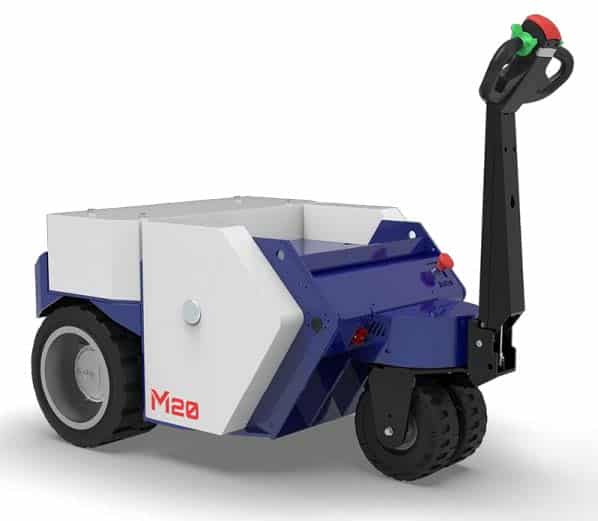
2. M 20 Electric Pedestrian Tug

  • Power: Electric | 24 Volt
  • Towing capacity: 30,000kg
  • Range: 12 miles
  • Length: 1,631mm
  • Width: 940mm

The M 20 delivers extremely high towing capacity in a pedestrian-controlled format. That combination is particularly valuable in cargo handling zones where heavy loads require precise positioning rather than long-distance hauling.

Walking alongside the unit improves line-of-site visibility when aligning cargo dollies or positioning equipment inside tighter operational envelops. This makes it ideal for:

  • Cargo terminal staging areas
  • Heavy dolly repositioning
  • Maintenance hangars with restricted turning space
  • Situations requiring millimetre-level alignment

While it has higher rated towing capacity than some ride-on units, its role is control and precision rather than extended route towing.


3. MT 440 Electric Tow Rug

  • Power: Electric | 48 Volt
  • Towing capacity: 9,250kg
  • Controller: AC Electronic speed controller
  • Body: All-steel unibody
  • Steering: Automotive steering wheel

The MT 440 sits in the mid-heavy towing bracket. It bridges the gap between pedestrian tugs and large industrial tow tractors.

Its AC electronic speed controller provides smooth acceleration and regenerative braking control, reducing load shock when initiating movement. This really matters when towing partially loaded baggage carts where sudden torque or turning can destabilise the train. This model is perfect for:

  • Medium-length baggage routes
  • Regional airports
  • Engineering equipment transport
  • Apron operations requiring agility and durability

The all-steel body also supports long-term airside exposure, including weather and surface wear.


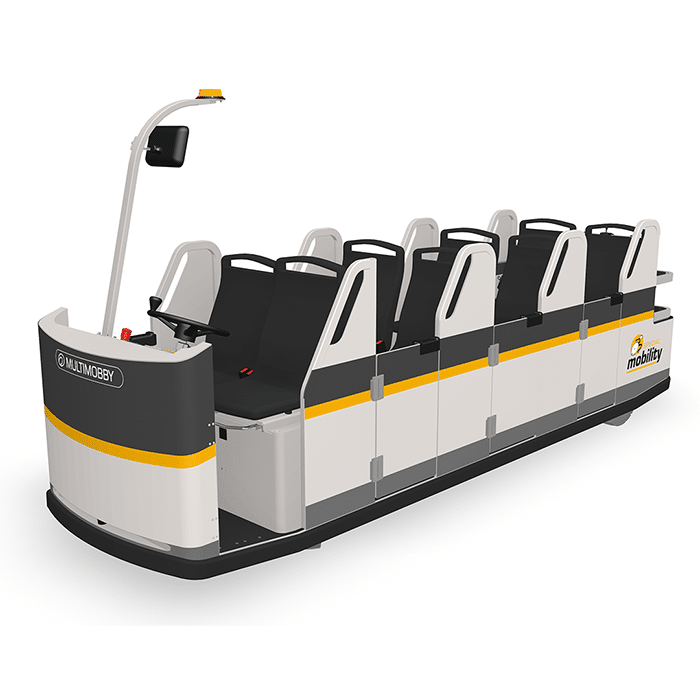
4. Multi Mobby 8 – PRM Transporter

  • Power: Electric
  • Carrying capacity: 8 people
  • Load capacity: 1,720kg
  • Speed: 4 mph
  • Length: 3933mm

Passenger assistance for those with reduced mobility requires controlled, low-speed vehicles designed for pedestrian-heavy environments. The Multi Mobby 8 fulfils this role within terminal buildings incredibly well. Its configuration supports:

  • Assisted gate transfers
  • Check-in to departure lounge movement
  • Boarding support coordination
  • Terminal mobility services

Operating at 4 mph, this PRM transport vehicle prioritised safety and stability over speed. It complements larger passenger buses by addressing accessibility requirements directly.


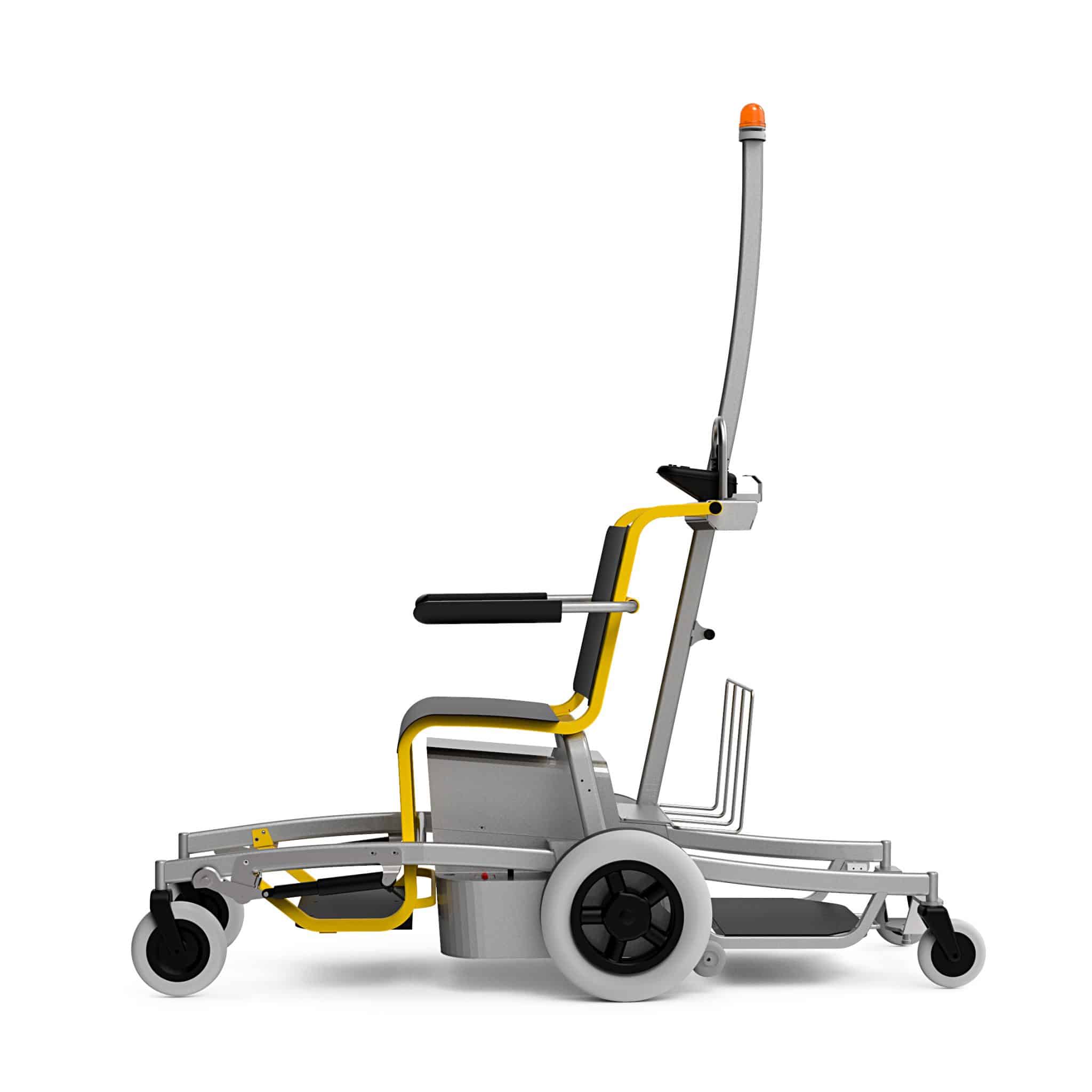
5. E-Mobby Electric Powered Transport Chair

  • Power: Electric | 24 Volt
  • Carrying capacity: 1 person
  • Load capacity: 450kg
  • Speed: 5 mph
  • Climbing ability: 8%

The E-Mobby Electric Powered Transport Chair is designed for single-passenger assisted mobility within terminal environments. Unlike multi-passenger PRM vehicles, this unit focuses on one-to-one transport where manoeuvrability and close supervision are essential. In practical airport operations, the E-Mobby is best suited to:

  • Assisted movement from check-in to security
  • Gate-to-aircraft transfers via airbridges
  • Supporting passengers across extended terminal corridors
  • Situations requiring controlled, individual passenger handling

Where larger PRM transporters such as the Multi Mobby 8 are used for group mobility, the E-Mobby addresses individual journeys that demand greater precision and closer care. It completes the passenger mobility layer of an airport EV fleet by ensuring accessibility services remain efficient, safe and physically sustainable for staff.


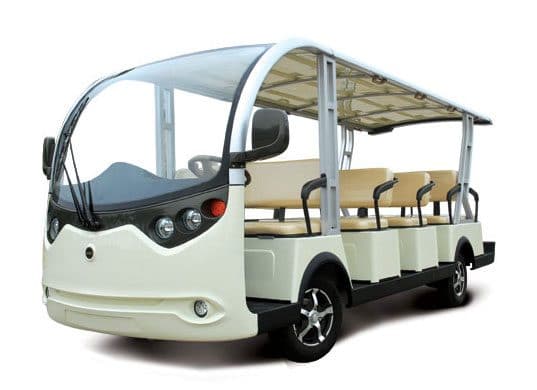
6. EP 14 Passenger Bus Multi Passenger Electric Vehicle

EP 14 Passenger Bus Multi Passenger Electric Vehicle

  • Power: Electric | 72 Volt
  • Carrying capacity: 14 people
  • Range: 56 – 74 miles
  • Speed: 18 mph
  • Climbing ability: 18%

Passenger transfer between remote stands and terminals requires reliable, consistent shuttle capability. The EP 14 provides that without the emissions profile of diesel alternatives.

Its extended range supports continuous daily cycles, while the 18% climbing ability ensures dependable ramp access. It is best suited to:

  • Remote stand boarding
  • Staff transfer between terminals
  • Park-and-ride airport services
  • Landside circulation loops

For regional airports especially, it offers an electric alternative to traditional diesel apron buses.


7. EP 500 Electric Platform Truck

  • Power: Electric
  • Load capacity: 1,000kg
  • Range: 12 miles
  • Speed: 3 mph
  • Length: 1,672mm

The EP 500 supports medium-weight logistics tasks that do not justify heavier units. In airports, there often include tasks like equipment relocation or spare part delivery. Its 1,000kg capacity makes it appropriate for:

  • Aircraft component transport
  • Engineering tool distribution
  • Temporary infrastructure movement
  • Retail and catering resupply within secure zones

It fills the gap between light-duty platform trucks and heavy waste carriers, maintaining manoeuvrability while increasing carrying efficiency.


8. VCA 412 Electric Flatbed Burden Carrier

VCA 412 Electric Flatbed Burden Carrier

  • Power: Electric | 48V
  • Load capacity: 1,500 – 2,000kg
  • Towing capacity: 8,000kg
  • Length: 2800 – 3220mm
  • Turning radius: 3087mm

The VCA 412 Electric Flatbed Burden Carrier is designed for mixed logistics operations where both carrying capacity and moderate towing capability are required within the same duty cycle.

Its flatbed configuration allows direct transport of consolidated equipment, tool cages, ground support units and palletised materials without the need for separate trailers.

In operational terms, the VCA 412 is well suited to:

  • Transporting engineering equipment to remote stands
  • Moving consolidated ground support equipment between apron zones
  • Supporting cargo staging areas with combined load and tow tasks
  • Replacing multiple lighter platform trucks on structured logistics routes

For airports seeking to streamline internal logistics without stepping up to 80V heavy-duty systems, the VCA 412 provides a balanced solution combining controlled towing strength with meaningful flatbed carrying capacity.


Conclusion

Electric utility vehicles play a practical role in modern airport ground operations. From towing baggage and cargo dollies to transporting equipment, removing waste and moving passengers between stands and terminals, each vehicle type supports a specific daily function.

Heavy-duty tow tugs handle structured airside routes, pedestrian units manage controlled positioning, burden carriers combine staff and equipment transport and platform trucks streamline logistics across apron areas. Passenger and PRM vehicles complete the picture by supporting safe terminal mobility.

To explore the full range of electric airport transport vehicles available, browse our ranges now. Or if you would prefer tailored guidance, contact our team to discuss your airport requirements with a knowledgeable adviser.

Do You Need a License for an Electric Utility Vehicle?

Whether you need a license for an electric utility vehicle depends largely on where and how it is being used. In the UK, the rules differ significantly between vehicles operated exclusively on private land and those driven on public roads.

This article explains the legal position in practical terms. It outlines the types of licenses that may be required, clarifies how electric utility vehicles are classified and examines some of the ranges stocked by our team here at ePower Trucks, so that you can be informed when it comes to your licensing requirements.

When is a driving license not required?

In many cases, no standard driving license is legally required for driving an electric utility vehicle.

If an electric utility vehicle is used on private land, such as:

then UK road traffic legislation does not apply in the same way it does on public roads. This means:

  • No DVLA driving license is legally required
  • The vehicle does not need to be taxed
  • It does not require MOT testing
  • It does not need to be registered with the DVLA

However, this does not remove the employer’s responsibilities. Under the Health and Safety at Work etc. Act 1974 and associated regulations such as the Provision and Use of Work Equipment Regulations 1998 (PUWER), operators must be properly trained and competent. Employers must ensure safe use, adequate supervision and appropriate risk assessments.

In practice, most organisations require internal training and authorisation before allowing staff to operate electric utility vehicles, even where no DVLA licence is required.


When is a driving license required?

A driving licence becomes necessary when a road-legal electric utility vehicle is used on a public road.

A public road includes any highway maintainable at public expense, as well as roads with public access. The moment a vehicle enters that environment, it falls within the scope of the Road Traffic Act 1988.


Category B license (standard car license)

Many road-legal electric utility vehicles can be driven with a standard Category B car licence, provided:

  • The vehicle’s Maximum Authorised Mass (MAM) does not exceed 3,500kg
  • It meets UK road vehicle construction and use regulations
  • It is properly registered, insured and taxed

Most compact electric utility vehicles intended for light commercial use fall within this threshold.


Category C1 or C license

If the vehicle exceeds 3,500 kg MAM, a higher category licence may be required:

  • Category C1 – Vehicles between 3,500kg and 7,500kg
  • Category C – Vehicles over 7,500kg

This is less common for typical site-based electric utility vehicles but may apply to heavier multi-passenger electric trucks configured for road use.


How electric utility vehicles are legally classified

Classification determines licensing requirements.

Electric utility vehicles used on roads are typically registered as one of the following:

  • N1 category vehicles – Light goods vehicles up to 3,500kg
  • Quadricycles (in small configurations)
  • Specialist utility vehicles depending on build and specification

The classification depends on weight, speed capability, design and more. For example:

  • A low-speed vehicle restricted to 25 mph and used primarily on private land may not be road registered
  • A road-legal model capable of standard traffic speeds must comply with UK Whole Vehicle Type Approval or Individual Vehicle Approval

Understanding this distinction is essential before making assumptions about licensing.


Insurance and MOT

If the vehicle is used on public roads, the following are required:

  1. DVLA registration
  2. Road tax (Vehicle Excise Duty), though electric vehicles often benefit from reduced or zero rates
  3. Valid motor insurance
  4. MOT testing once the vehicle reaches three years of age

If the vehicle remains strictly off-road on private property, these requirements generally do not apply, though many organisations still choose to insure their fleet for liability reasons.


Operator training and workplace responsibilities

Even where a DVLA licence is not legally required, employers cannot ignore safety obligations. Under PUWER, operators must receive adequate training for safe operation and instruction on load limits and vehicle controls.

Electric utility vehicles may appear straightforward to operate, but load handling, tipping mechanisms, pedestrian interaction risks, towing capabilities and other specialist operations require structured training.

This distinction between legal licensing and workplace competence is often misunderstood. A license may not be mandatory, but training always is.


Key factors that determine license requirements

Rather than focusing solely on whether the vehicle is electric, consider these determining factors:

Factor Why It Matters
Location of use Public roads trigger licensing laws
Vehicle weight (MAM) Determines licence category
Speed capability May affect classification
Registration status Road registration requires compliance
Intended purpose Private site use differs from transport operations

The power source is largely irrelevant from a licensing perspective. The law treats electric and internal combustion vehicles similarly in terms of licence requirements.


Practical guidance before purchasing

Before you commit to acquiring a specific electric utility vehicle, be sure to clarify:

  1. Will it ever leave private land?
  2. What is the vehicle’s Maximum Authorised Mass?
  3. Is road registration required?
  4. Who will operate it and what training is needed?

Answering these questions early will prevent any future compliance issues. If you’re purchasing an EUV from us, here at ePower Trucks, our sales team will be able to give you all the information you need.

Organisations often assume electric automatically means simplified regulation. In reality, the legal framework depends on use and classification rather than propulsion type.


Conclusion

In most workplace environments where electric utility vehicles operate solely on private land, a DVLA driving licence is not legally required. Once the vehicle is used on a public road, however, the appropriate licence, registration and insurance become mandatory.

The key factors are simple: where the vehicle will be used, how it is classified and its maximum authorised mass. Clarify these points early to avoid compliance issues.

If you’re in the market for a high-quality electric utility vehicle, explore our ranges here at ePower Trucks now. Or simply speak to our sales team to learn more about licensing and our road-legal options.

How Do Road Sweepers Work?

Road sweepers are a familiar sight on streets and construction sites, yet their operation is often poorly understood. As environmental regulations tighten and electric road sweepers become more widely adopted, many organisations are looking more closely at how these machines function and whether they represent a sound investment.

This guide explains how road sweepers work, including brush systems, suction technology and dust control. It also outlines the differences between diesel and electric road sweepers, how they are operated, what licences may be required in the UK and when they make practical and financial sense.

How do road sweepers work?

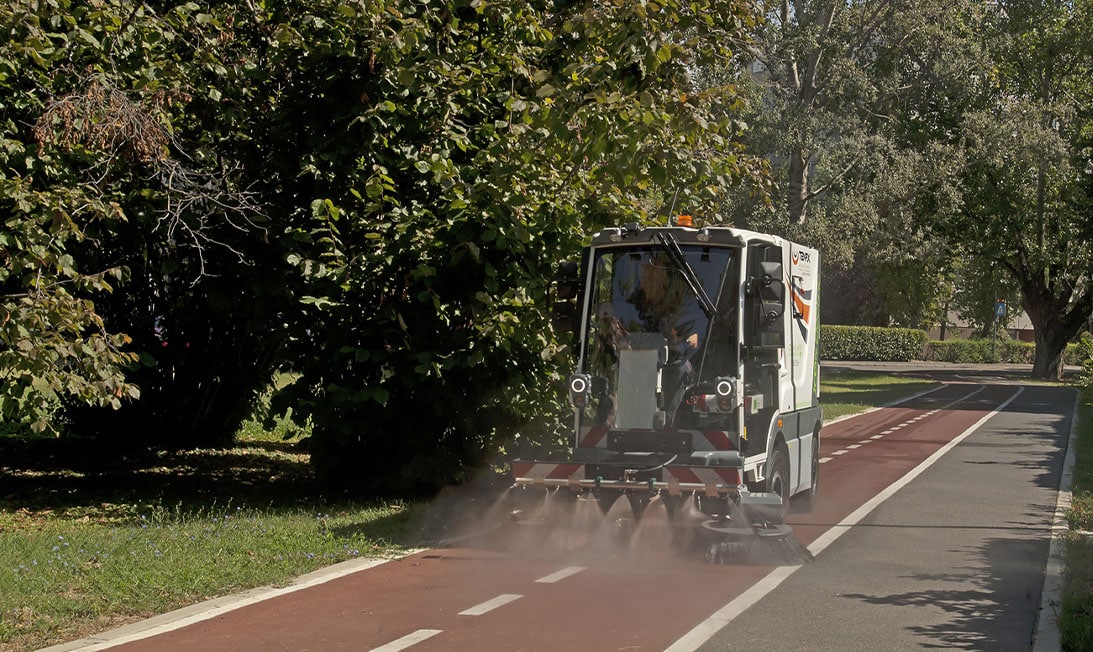
Road sweepers are purpose-built machines designed to remove debris, dust and waste from road surfaces. They do this using a combination of attached tools like brushes and suction pipes. While they may appear simple from the outside, modern road sweepers are highly engineered vehicles built to meet environmental standards and efficiency targets.

Whether operated by a local authority or a facilities management team or whoever else, understanding how road sweepers helps organisations select the right machine and use it effectively.


Core components of a road sweeper

Every road sweeper, regardless of size or fuel type, relies on several key systems working together.


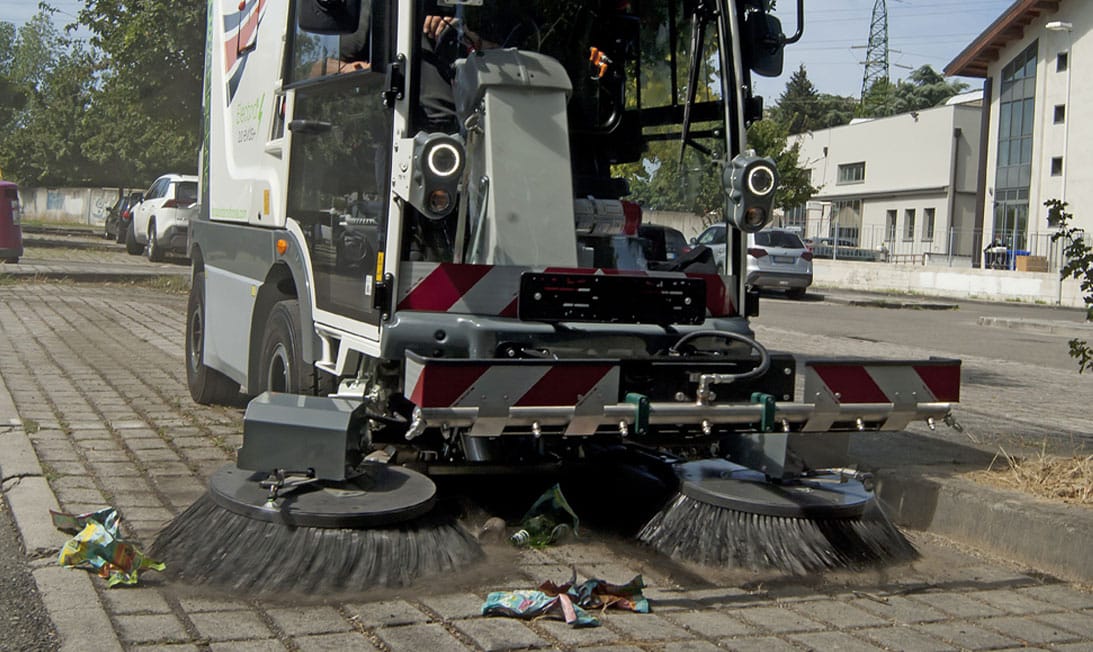
1. Rotating brushes

Brushes are the first point of contact with the road surface. Most sweepers use:

  • Side brushes (also called gutter brooms) to sweep debris from kerbs and edges towards the centre
  • A central cylindrical brush to move debris towards the suction inlet

These brushes are typically hydraulic or electrically driven and adjustable to maintain correct contact pressure with the ground. Proper adjustment prevents premature wear and ensures effective debris collection.


2. Suction or vacuum system

Once debris is gathered, it is lifted into the hopper (where the waste is collected) using suction. This system usually consists of:

  • A powerful fan or impeller
  • A suction nozzle positioned behind the brushes
  • A debris hopper or container

The vacuum creates negative pressure, drawing material into the storage compartment. The effectiveness of this system determines how well fine dust and light litter are removed.


3. Water spray and dust suppression

To prevent airborne dust, road sweepers use a water spray system directed at the brushes and suction inlet. This helps to:

  • Reduce particulate matter emissions
  • Improve operator visibility
  • Meet UK air quality standards

Effective dust suppression is particularly important in urban areas and construction environments where particulate matter (PM10 and PM2.5) must be controlled.


4. Filtration system

Air drawn into the machine must be filtered before release. High-quality road sweepers incorporate multi-stage filtration to trap fine dust particles. This is especially important for compliance with environmental and occupational health standards.

Together, these systems allow the road sweeper to clean efficiently while minimising environmental impact.

Types of road sweepers

Not all road sweepers operate in the same way. There are three primary sweeping technologies used in the UK.


Mechanical broom sweepers

Mechanical sweepers rely primarily on brushes and a conveyor system. They work by brushing debris onto a conveyor belt, which then lifts the material into the hopper.

These machines are robust and well-suited for heavy debris such as gravel and construction waste. They are commonly used on highways and large infrastructure projects.


Vacuum road sweepers

Vacuum sweepers use suction as the main debris collection method. They do still utilise brushes to agitate and dislodge debris, then using a high-powered vacuum to lift material into the hopper.

They are ideal for urban street cleaning and sites where fine dust builds up in hard to reach places like against curbs or access paths.


Regenerative air sweepers

Regenerative air sweepers use a closed-loop system, unlike other sweeper vehicles. They work by:

  • Dislodging debris with a blast of air
  •  The same air stream vacuums debris into the hopper
  • Air is then filtered and recirculated

This system provides excellent fine dust control and is often chosen for environmentally sensitive areas.

Each system serves a different operational need. Choosing the right type depends on debris profile, frequency of use and regulatory requirements.

How electric road sweepers work

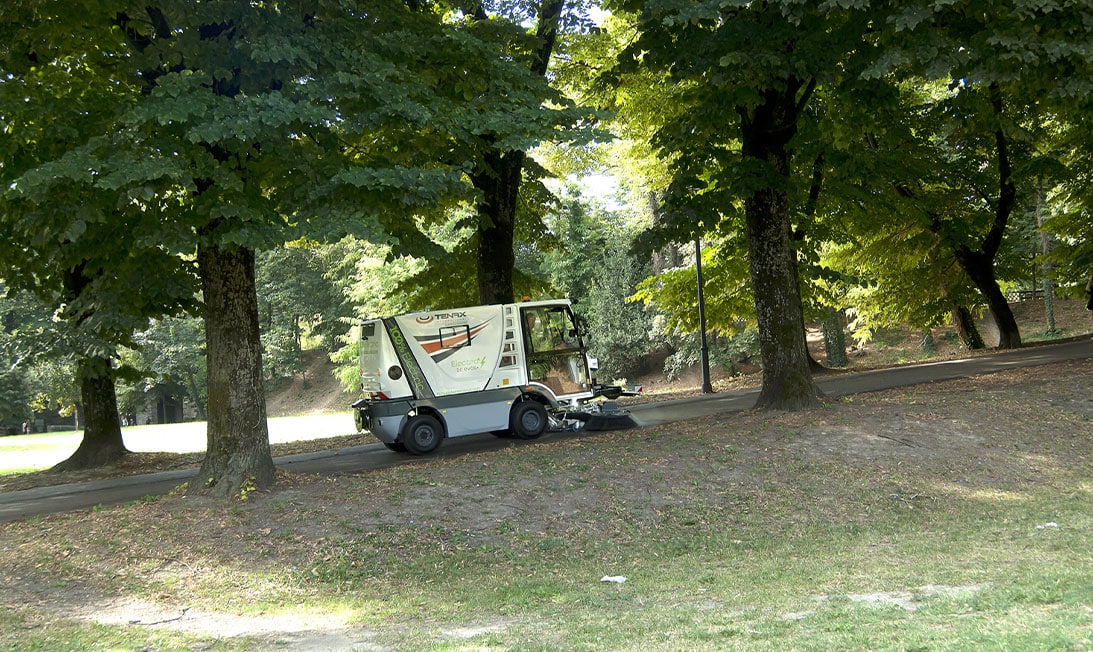
Electric road sweepers, like most electric utility vehicles, operate using battery-powered drive systems and electric motors instead of traditional diesel engines. The sweeping mechanism itself remains broadly similar, but the power source changes significantly.

Key differences from diesel models:

  1. Battery-powered drivetrain – Lithium-ion battery packs power the vehicle and auxiliary systems
  2. Electric motors for brushes and suction – These replace the hydraulic systems driven by a diesel engine
  3. Reduced noise levels – Electric sweepers operate far more quietly, often below 70 dB depending on configuration.
  4. Zero tailpipe emissions – This makes them suitable for low-emission zones and indoor or semi-enclosed environments.

Electric road sweepers are increasingly adopted by UK councils working towards net zero targets and by contractors operating in Clean Air Zones.

At ePower Trucks, we stock a wide range of electric street cleaning vehicles, so if you’re looking to make the switch and go green in all your operational activities, browse the range of speak to our sales team today.


How to operate a road sweeper safely

Operating a road sweeper requires technical understanding and situational awareness. While controls will vary by manufacturer and model, the general operating principles are consistent.


Pre-operation checks

Before starting work:

  • Inspect tyres and brush condition
  • Check water tank levels
  • Ensure filters are clean
  • Verify warning lights and safety systems

Routine inspections reduce breakdowns and improve sweeping performance.


During operation

Operators should always:

  • Adjust brush pressure based on surface type
  • Maintain appropriate sweeping speed
  • Monitor hopper fill levels
  • Avoid excessive water usage

Speed is particularly important. Sweeping too quickly reduces debris collection efficiency, while sweeping too slowly can reduce productivity.


Post-operation maintenance

After use:

  • Empty and clean the hopper
  • Rinse filters if required
  • Inspect brushes for wear
  • Recharge batteries in electric road sweepers

Electric models simplify maintenance by removing engine oil checks, fuel system servicing and emissions-related components.

Do you need a license to drive a road sweeper in the UK?

License requirements depend on vehicle weight and whether the sweeper is road-legal.


Standard road-legal sweepers

Most full-size road sweepers exceed 3.5 tonnes gross vehicle weight. In the UK, this typically requires:

  • Category C (HGV Class 2) licence for vehicles over 3.5 tonnes
  • A valid Driver CPC (Certificate of Professional Competence) if operating commercially


Compact or utility sweepers

Smaller electric road sweepers (like the SmartWind Ride On Street Sweeper) and compact utility vehicles may fall under:

  • Category B licence (standard car licence), if under 3.5 tonnes

Operators should also receive additional support like manufacturer-specific training, health and safety training, familiarity with PUWER regulations (Provision and Use of Work Equipment Regulations 1998).

For local authorities and contractors, ensuring compliance with DVLA licensing requirements and HSE guidance is essential.


Are street sweepers worth the money?

For most organisations, the question is less about cost and more about long-term operational value. A road sweeper directly contributes to compliance, safety and asset protection — all of which carry measurable financial implications.


Reducing risk and protecting infrastructure

Regular road sweeping helps prevent:

  • Blocked drainage systems and surface water flooding
  • Build-up of debris that accelerates road surface wear
  • Airborne particulate matter, particularly PM10 and PM2.5
  • Slip hazards in industrial or high-footfall environments

For local authorities, this supports statutory duties under environmental protection and highways legislation. For contractors and facilities managers, it reduces liability exposure and reactive maintenance costs. In many cases, prevention is significantly less expensive than remediation.


Understanding total cost of ownership

The upfront purchase price of a road sweeper can be substantial, but evaluating value requires a broader view. Key considerations include:

  • Fuel or energy consumption
  • Maintenance and servicing requirements
  • Operator costs
  • Expected service life
  • Residual value

Electric road sweepers can improve the financial case over time. Lower energy costs, fewer moving engine components and reduced servicing complexity often translate into lower lifetime operating costs, particularly for fleets operating in Clean Air Zones or under sustainability targets.


Conclusion

Road sweepers combine mechanical brushing, suction, filtration and more to remove debris efficiently while controlling dust and protecting air quality. As environmental standards tighten and operating costs come under greater scrutiny, electric road sweepers offer a practical, lower-emission alternative without compromising performance.

To explore modern electric street cleaning equipment, see the latest electric road sweeper range from our team at ePower Trucks or speak to a member of the sales team to discuss your operational requirements in more detail.

Best Electric Utility Vehicles for Warehouses

In warehouse environments, common, high-frequency tasks like lifting boxes, manoeuvring stored goods, accessing stock and transporting materials across floor areas all take their toll on a manual workforce. The use of electric utility vehicles like tow tugs and platform trucks have become practical methods of reducing strain and generally streamlining internal logistics throughout the working day.

In this article, we’ve gathered six electric vehicle from our range here at ePower Trucks that are particularly well suited to warehouse operations. Each is selected for its ability to improve productivity and reduce manual handling risks.

Top picks for the best electric warehouse utility vehicles


1. EP 300 Electric Platform Truck

  • Maximum carrying capacity: 300kg
  • Power: Electric, 24 volt
  • Length and width: 1585mm x 797mm
  • Top speed: 3mph
  • Range: 12 miles

The EP 300 is designed for continuous, light-to-medium internal transport. In practical warehouse terms, that means moving boxed goods between picking aisles and packing benches, transferring components to assembly zones or carrying tools and consumables for maintenance teams.

Its compact footprint allows it to operate in standard aisle widths without disrupting forklift routes. Because loads sit on a flat platform rather than forks, it handles non-palletised goods efficiently – cartons, totes, loose returns and irregular items that would otherwise be hand-carried.

For facilities trying to reduce repeated manual lifting over distances of 30–150 metres, the EP 300 integrates easily into daily routines without over-specifying capacity.


2. EP 500 Electric Platform Truck

  • Maximum carrying capacity: 1000kg
  • Power: Electric, 24 volt
  • Length and width: 1672mm x 797mm
  • Top speed: 3mph
  • Range: 12 miles

When loads become heavier or more consolidated, the EP 500 provides extra strength and deck space while remaining practical indoors.

Common applications include:

  • Moving boxed stock from goods-in to staging areas
  • Transferring completed orders to despatch
  • Handling dense components such as engineering parts

The higher payload capacity reduces the number of trips required per shift. In busy fulfilment centres, fewer journeys mean less aisle congestion and less pressure on forklifts for tasks that do not involve lifting to height.

Low-speed electric drive also means the truck performs the same whether lightly loaded or at full capacity.


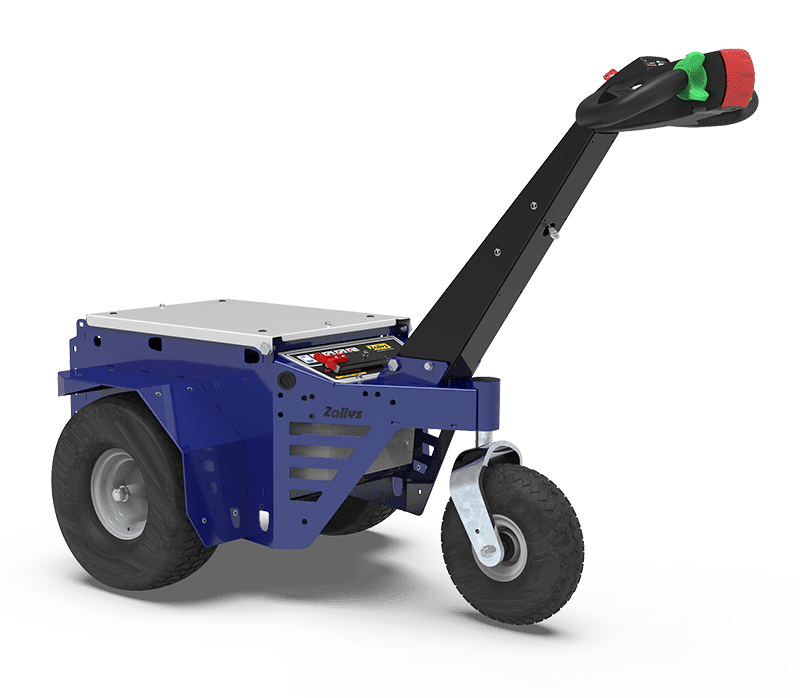
3. Jobmaster Electric Pedestrian Tug

  • Maximum towing capacity: 3,000kg
  • Maximum carrying capacity: 300kg
  • Power: Electric, 24 volt
  • Length and width: 1338mm x 720mm
  • Top speed: 3mph
  • Range: 12 miles

Warehouses that rely heavily on roll cages, dollies or braked trailers benefit quickly from powered tugs.

The Jobmaster pedestrian tug allows one operator to move loads that would otherwise require two people or improvised towing with a forklift. Walking alongside the load gives the operator clear visibility, which is particularly useful in marshalling lanes, narrow corridors or chilled environments.

Typical uses include:

  • Repositioning loaded cages
  • Aligning trailers to dock doors
  • Moving waste bins safely
  • Handling braked carts on slight gradients

Electric drive delivers strong pulling force from a standstill, which is where most manual strain occurs. In daily operation, that makes a noticeable difference to safety and fatigue levels.


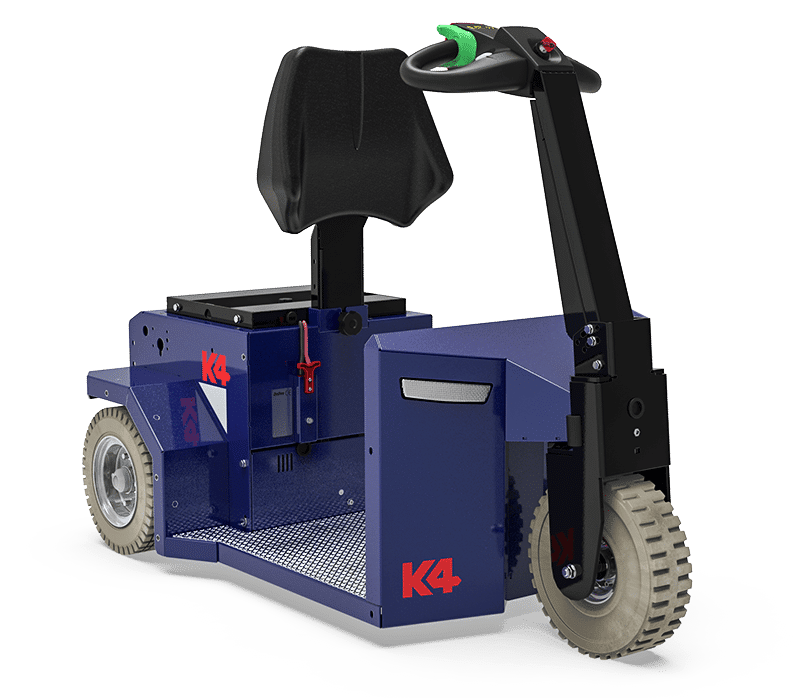
4. K4 Industrial Electric Tow Tractor

K4 Industrial Electric Tow Tractor

  • Maximum towing capacity: 2,500kg
  • Power: Electric, 24 volt
  • Length and width: 1400mm x 743mm
  • Top speed: 4.9mph
  • Turning radius: 2.8m

The K4 Industrial Electric Tow Tractor is designed for situations where pedestrian-controlled movement is no longer efficient and internal distances begin to affect productivity.

In medium to large warehouses with defined transport paths, the K4 replaces ad-hoc forklift trips and manual towing with a dedicated internal transport vehicle. Because it is ride-on, operators remain seated throughout each cycle, which improves speed and reduces fatigue over longer shifts. It is particularly effective for:

  • Completing regular transport circuits between pick zones, consolidation areas and despatch bays
  • Pulling trains of loaded carts with consistent tractive force
  • Returning empty cages to goods-in in a single movement
  • Supporting structured replenishment routes across large floor areas

The electric drivetrain delivers peak torque from zero speed. This matters when starting a multi-cart train or operating in stop-start traffic. It also removes clutch wear, gear shifts and engine noise from the working environment.

For warehouses operating structured internal logistics routes, the K4 improves flow, reduces forklift dependency and supports higher throughput without increasing congestion.


5. M 15 Electric Platform Truck

  • Maximum load capacity: 500kg
  • Power: Electric, 24 volt
  • Length and width: 1232mm x 690mm
  • Top speed: 3mph
  • Range: 12 miles

The M 15 Electric Platform Truck steps up from the smaller EP models where heavier and bulkier internal movements are common.

In many warehouses there are loads that are too large for standard platform trucks yet do not require a forklift: grouped pallets ready for consolidation, heavy totes being moved between zones or large maintenance equipment that needs repositioning. The M 15’s higher payload equips it for:

  • Bulk movement of grouped cases or boxed stock
  • Transfer of heavier tooling and equipment
  • Supporting line side replenishment with dense loads

Unlike a forklift, its flat deck removes the complication of forks and enables rapid loading and unloading from the sides. So, for tasks that fall between light platform truck work and full forklift duty, the M-15 fills a practical gap. Its manoeuvrability also makes it suitable for medium-to-large warehouse floors without creating traffic conflicts.


6. MT 250 Electric Tow Tug


MT 250 Electric Tow Tug Side View

  • Maximum towing capacity: 2,000kg
  • Maximum carrying capacity: 226kg
  • Power: Electric, 24 volt
  • Length and width: 1,143mm x 1,930mm
  • Top speed: 7mph
  • Turning radius: 2m

The MT 250 Electric Tow Tug is a compact pedestrian-controlled unit designed for indoor warehouse logistics. It bridges the gap between light manual handling and larger ride-on tractors, offering strong pulling capability for wheeled loads without increasing vehicle footprint.

It is particularly effective where loads are repositioned frequently and space is limited. In narrow aisles or mixed pedestrian areas, the walk-along format gives operators close control and clear visibility.

Typical day-to-day applications include:

  • Pulling loaded roll cages between goods-in, storage and pick zones
  • Towing braked trailers short distances indoors
  • Clearing batch trolleys from picking lines
  • Returning empty containers to staging areas

The electric drive delivers steady, low-speed torque, which is most important when starting loads from rest or manoeuvring in confined spaces. For warehouses making regular short tow movements, the MT 250 provides controlled traction without the scale or complexity of a ride-on tractor.


Conclusion

Electric utility vehicles play a practical role in modern warehouse operations. From light internal carrying and heavy platform work to pedestrian towing and structured cart movement, each vehicle type supports a specific daily task. Choosing the right model comes down to understanding load type, movement patterns and how vehicles integrate with existing traffic routes.

To explore the full range of electric utility vehicles available, browse our ranges now. Or if you would prefer tailored guidance, contact our sales team to discuss your warehouse requirements with a knowledgeable sales adviser.

Manual vs Electric Wheelbarrows

Manual wheelbarrows and electric wheelbarrows both serve a simple purpose – moving loose or bulk materials efficiently, but they perform very different in practice.

This article will go into detail on whether a manual or powered wheelbarrow is right for your material handling needs, looking at factors such as their different designs, costs, safety implications, ease of use and more. So if you’re weighing up which type of wheelbarrow to go for, you’ll get all the information you need here.

Which works best on site?

Manual wheelbarrows remain a familiar and useful tool across farming and construction settings. They are simple and easy to use, and cheap for the most part, which makes them suited to use on smaller sites and for lighter duties.

Electric wheelbarrows however are becoming much more common where loads are heavier and output needs to stay consistent.

The difference between the two types of lifting equipment is not just that one has a motor and one doesn’t. It changes how loads are managed, how risk is distributes and how consistently work can be completed across a shift.


Design and mechanical difference

The defining distinction between the two barrow types is propulsion.

A manual wheelbarrow transfers part of the load to a single front wheel while operators push the remainder. Although the wheel reduces lifting force, the brunt of the weight is still on the operator’s arms, shoulders and lower back. On uneven ground, stabilising the road will require even more strain.

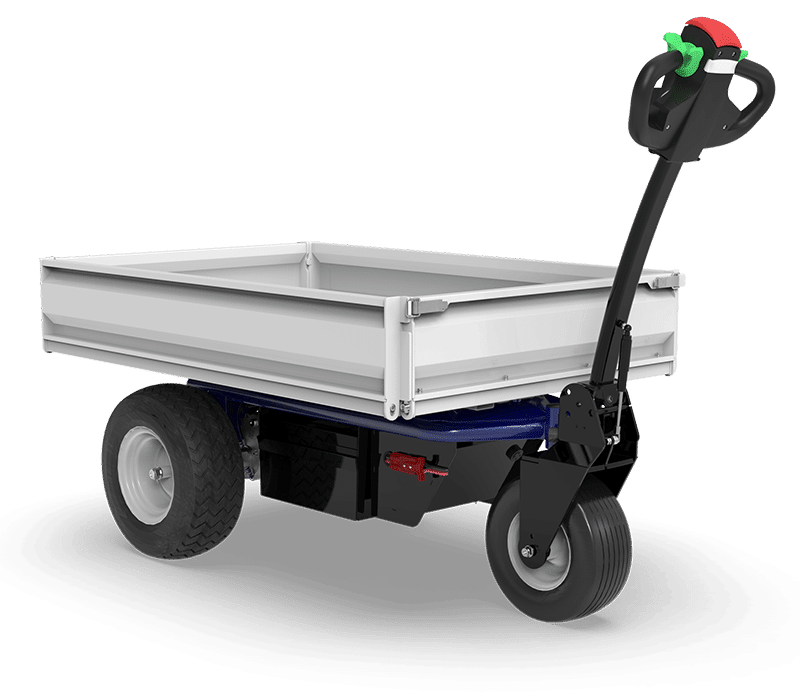
An electric wheelbarrow utilises a battery-powered motor that drives one or more wheels (the EP Electro Barrow and D1 Electric Wheelbarrow for example both feature 3 wheels). The motor generates torque and rotational force, which moves the load you’re carrying forward. The operator then only has to guide the machine using controls rather than providing sustained pushing force.

This shift reduces direct load transfer to the body and enables consistent movement across varied terrain.


Load capacity

Load capacity is often quoted in kilograms, but sustained throughput matters more in practice.

A manual wheelbarrow typically carries between 100 and 150kg depending on build quality and operator capability. While heavier loads are possible, control decreases as weight increases. Over time, fatigue reduces both speed and precision, especially when transporting dense materials such as wet concrete or compacted soil.

Electric wheelbarrows commonly support 250 to 500kg depending on model specification. Because propulsion is motor-driven, performance does not rely on operator strength. This allows heavier materials to be moved consistently across longer shifts without much physical strain. This fact alone makes them some of the best electric vehicles for farm settings, construction sites and the like.

On sites where material transport is repetitive, the cumulative productivity difference can be considerable.


Terrain and stability

Ground conditions expose the limitations of manual propulsion.

On flat, compact surfaces, manual wheelbarrows operate predictably. On inclines however, the operator must manage both forward force and balance. Descending slopes with a loaded barrow increases the risk of instability, particularly on loose or wet ground.

Electric wheelbarrows provide controlled propulsion and, in many models, integrated braking systems. Powered drive improves traction on soft surfaces, while multi-wheel configurations enhance lateral stability. Three-wheel designs, in particular, distribute weight more evenly and reduce tipping risk during turning.

Where terrain is uneven or constantly changing, motor assistance improves both safety and control.


Easy of use

Ease of use is closely linked to workload intensity.

Manual wheelbarrows require continuous exertion. Each journey involves lifting, pushing and stabilising. Over the course of a working day, this repeated strain will accumulate and take a toll. Even experienced operators will suffer from reduced efficiency and strain as fatigue increases.

Electric wheelbarrows reduce the propulsion burden. Operators focus on steering and positioning rather than force generation. Controls are typically intuitive, with variable speed settings allowing movement to be matched to terrain and load weight.


Cost (in operational context)

Manual wheelbarrows have a lower purchase cost and straightforward maintenance requirements. Wheels, frames, bearings, handles and such, can all be serviced or replaced with minimal complexity also. So for occasional use, they remain financially practical due to their affordability.

Electric wheelbarrows involve a higher initial investment due to the battery and motor systems. Ongoing considerations include battery charging cycles and periodic inspection of electrical components. Modern lithium-ion systems, commonly used across electric utility vehicles, offer improved lifespan and charging efficiency compared with older battery technologies. These combined features lead to a higher initial investment but

However, purchase price alone does not reflect operational impact. Where labour time is significant and material movement is frequent, improved throughput and reduced fatigue may justify the additional capital cost.

Evaluating total cost of ownership provides a more accurate comparison than headline pricing.


Application across site types

The suitability of either type of wheelbarrow will ultimately depend on task frequency and environment it will be used in.

In general, manual wheelbarrows remain appropriate for:

  • Light-duty landscaping
  • Short (last mile) transport distances
  • Smaller residential projects
  • Infrequent material handling tasks

Electric wheelbarrows are instead more suited to:

  • Commercial construction sites (especially those with gradients)
  • Civil engineering and groundwork projects
  • Industrial estates and facilities management
  • Operations seeking alignment with electric utility vehicle fleets

Where transport tasks form part of a structured workflow rather than an occasional requirement, motorised solutions integrate more effectively.


Manual vs Electric wheelbarrows – Comparison table

Factor Manual Wheelbarrow Electric Wheelbarrow
Initial Cost Lower purchase price Higher upfront investment
Maintenance Simple mechanical upkeep Battery management and electrical servicing
Typical Load Capacity 100–150kg 250–500kg depending on model
Physical Effort High, increases with terrain and weight Significantly reduced due to motor assistance
Stability on Slopes Operator-dependent Improved traction and braking control
Productivity Over Time Can decline as fatigue builds Consistent performance across shifts
Best Suited For Light, occasional use Heavy, repetitive or larger-scale operations

The comparison highlights a clear trade-off between simplicity and sustained capability.


Conclusion

Manual wheelbarrows remain appropriate where loads are light, distances are short and usage is occasional. They are simple, reliable and easy to store. Electric wheelbarrows are better suited to environments where material movement is frequent, loads are heavier and terrain is variable.

The decision ultimately depends on a range of unique factors. If you’re interested in the powered convenience and zero emission performance of an electric wheelbarrow, browse our range today or get in contact with a member of our sales team for pricing and delivery information.